Kalshi review
Kalshi review: is Kalshi legit?
Short answer: yes, Kalshi is a real, federally regulated exchange, not a scam. It is a CFTC-designated contract market, which is the same category of regulated venue as a futures exchange, and it is the most legitimate way to trade event contracts with dollars in the United States. That does not mean it is right for everyone, or that there is nothing to watch out for. This review covers what Kalshi actually is, what it costs, where it genuinely beats the alternatives, the real risks, and who should skip it. Written by the team behind BitPredict, a free prediction game, so read the last section for our obvious bias.

Is Kalshi legit? The regulatory answer


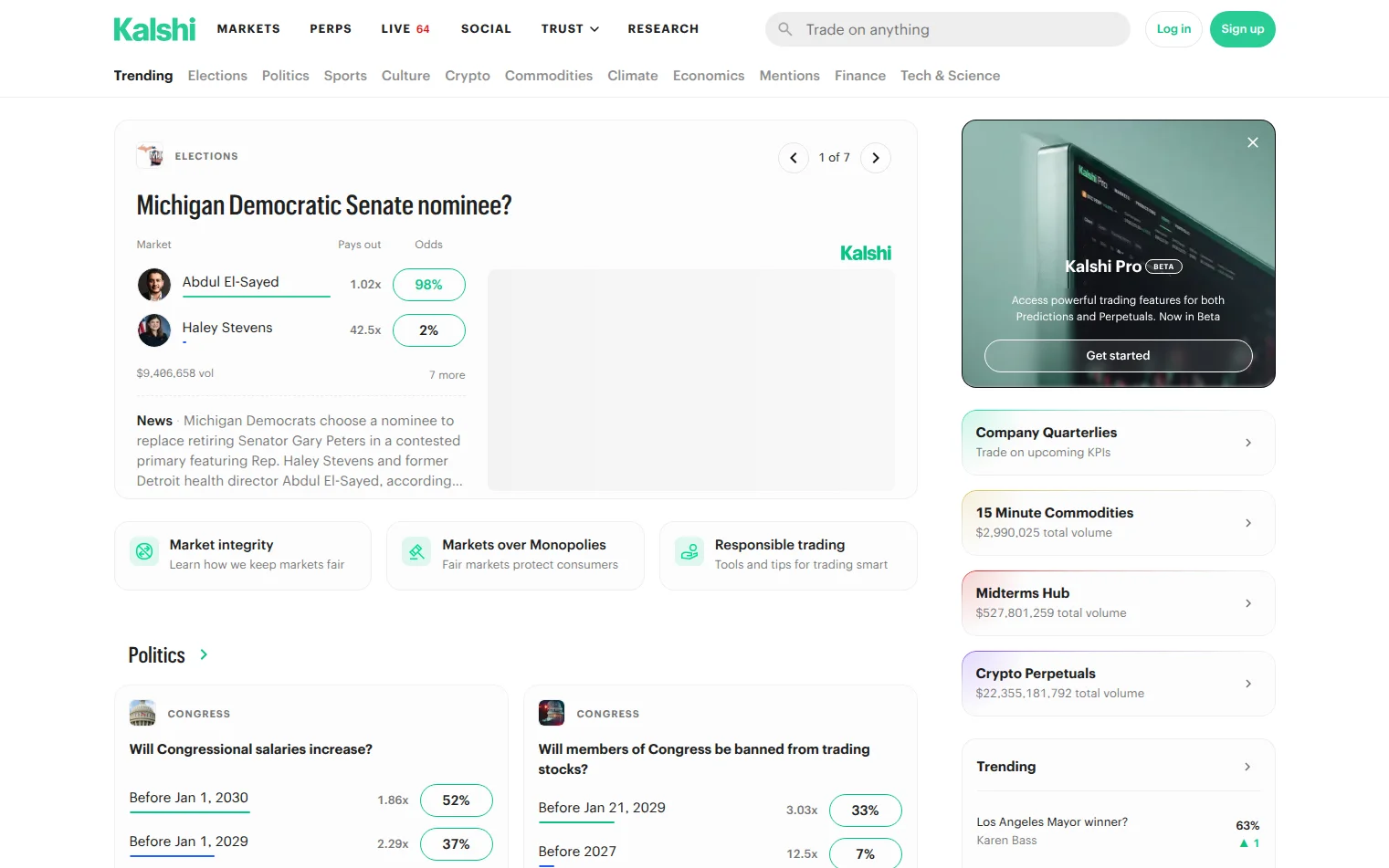
Kalshi operates as a CFTC-designated contract market, the US federal regulator for derivatives and futures. That is a meaningful, verifiable status, and it is the core of the answer to "is Kalshi legit": this is a federally regulated exchange, not an offshore book. Customer funds sit in segregated accounts, the exchange publishes a rulebook that governs how every market resolves, and it issues standard US tax paperwork.
Two honest caveats. Regulated does not mean risk-free: you can still lose every dollar you put into a position, and regulation governs the exchange's conduct rather than your trading outcomes. And Kalshi's expansion into sports event contracts has drawn legal challenges from several states, which are working through the courts. The exchange operates under federal oversight while those fights continue, but availability of specific sports markets can vary by state and can change.
What Kalshi actually is
Kalshi is an exchange where you buy and sell event contracts: yes-or-no claims about the future that settle at $1 if the event happens and $0 if it does not. If you buy at 40 cents and the event happens, you receive a dollar. The price is effectively the market's probability estimate.
- Markets: US economics and Fed decisions, politics, weather, sports, and crypto, among others.
- Currency: US dollars, funded from a bank account. No crypto wallet required.
- Resolution: against Kalshi's own published rulebook, rather than a token-holder vote.
- Paperwork: standard US tax forms are issued, so you are not reconstructing a crypto ledger in April.
- Access: a US-regulated product, with some markets restricted by state.
What it costs
Kalshi charges per contract, scaled to the odds, rather than a flat commission. The fee is largest on markets trading near 50/50 and shrinks to almost nothing at the extremes, because it is calculated from the expected earnings on the contract. Settlement is free, ACH transfers are free both ways, and debit-card funding carries a processing fee.
The full arithmetic, with a worked table of what a contract costs at each price, is in our Kalshi fees guide. The one-line version: if you day-trade coin-flip markets, fees are your biggest enemy; if you take positions at lopsided odds or post resting limit orders, they are close to negligible.
Where Kalshi genuinely wins
Naming what a competitor does better is the only way a review is worth reading. Kalshi is the best option in its category on several counts:
- Regulatory standing. A CFTC-designated contract market is about as legitimate as this product category gets in the US.
- Dollar rails. Fund from a bank, withdraw to a bank, free by ACH. No stablecoins, no wallets, no bridge risk.
- Tax paperwork handled. Standard US forms, rather than you reconstructing cost basis across a crypto ledger.
- US-specific markets nobody else matches, especially economic data prints, Fed decisions and weather.
- Rulebook clarity. Outcomes resolve against a published in-house rulebook, which is more predictable than an oracle vote on genuinely ambiguous questions.
- No settlement fee, so winning contracts pay out in full.
All of that is true and none of it is available on BitPredict, which does not handle money at all.
The real risks and downsides
- You can lose your entire stake. Event contracts settle at $0 or $1; a losing position goes to zero, and regulation does not change that.
- Coin-flip markets are expensive to trade actively, because the fee curve peaks exactly where uncertainty does.
- Sports market availability is contested in several states, and the legal position keeps moving.
- In-house resolution concentrates discretion in the exchange. The rulebook is clear, but Kalshi is the one applying it.
- Thin markets have wide spreads. On less popular questions the spread can cost more than the fee.
- It is genuinely engaging, which is a risk of its own if you are prone to overtrading. Only fund what you can afford to lose.
Is Kalshi worth it? Who should and should not use it
- Worth it if you want regulated, dollar-denominated exposure to real-world events, especially US economics, and you want clean banking and tax paperwork.
- Worth it if you have genuine edge on lopsided markets, where the fee structure barely touches you.
- Probably not worth it if you plan to actively scalp 50/50 markets, because the fee curve is designed to make that expensive.
- Not worth it if you only want to know whether your market instincts are any good. That does not require money, and paying to find out is the expensive route.
- Not available in the same shape everywhere: check which markets are open where you live before funding.
Our bias, stated plainly
We build BitPredict, a free crypto prediction game. We are not a prediction market, we do not take deposits, and we cannot pay you trading profits. So we have an obvious interest in you considering the free option, and you should weigh this review knowing that.
Here is the honest split. If you want to trade events for money on regulated rails, Kalshi is the better product and we do not compete with it. If you want to find out whether you can call the market, and would rather not pay per contract to discover the answer, BitPredict gives you a timestamped, public, accuracy-scored record for nothing. Plenty of people do both. See the Kalshi vs Polymarket head-to-head, the Kalshi alternatives roundup, or our pricing, which is free.
 KalshiRegulated US exchange
 PolymarketCrypto-native · USDC
 RobinhoodEvent contracts in-app
 PredictItUS politics markets
 ManifoldPlay-money markets
 MetaculusForecasting community
 BitPredictFree · scored on accuracy
Frequently asked questions
Is Kalshi legit?
Yes. Kalshi is a CFTC-designated contract market, meaning it is a federally regulated US exchange rather than an offshore or unregulated venue. Customer funds are held in segregated accounts and markets resolve against a published rulebook. That is a genuine legitimacy signal, though it does not remove the risk of losing money on a position.
Is Kalshi safe to put money into?
It is a regulated exchange with segregated customer funds, which addresses platform risk. It does not address market risk: event contracts settle at $0 or $1, so a losing position loses everything you put into it. Fund only what you can afford to lose, and check which markets are available where you live.
Is Kalshi worth it?
It is worth it if you want regulated, dollar-based trading on real-world events with clean bank funding and US tax forms, especially on economics and weather markets nobody else offers. It is a poor fit if you plan to actively trade coin-flip markets, where the fee curve peaks, or if you only want to test your instincts, which does not require money at all.
How much does Kalshi cost to use?
There is no subscription. You pay a per-contract trading fee scaled to the odds, largest near 50/50 and near zero at the extremes. Settlement is free, ACH deposits and withdrawals are free, and debit-card funding carries a processing fee. Our Kalshi fees guide works through the numbers at each price.
Is Kalshi legal in the US?
Kalshi operates as a CFTC-designated contract market, so it is federally regulated in the US. Its sports event contracts have drawn legal challenges from several states and that position is still moving through the courts, so the availability of specific markets can vary by state and change over time.
What is a free alternative to Kalshi?
BitPredict is a free crypto prediction game: call a coin up or down over 24 hours, get scored on accuracy, and build a public track record with nothing deposited and nothing wagered. Manifold offers play-money markets and Metaculus scores forecasting accuracy. None of them pay trading profits, which is the trade-off for costing nothing.